
 Español
 Portugues
 Pусский
 Français
 العربية
 ไทย
ไทย Türk dili
 Indonesia
 Tiếng Việt


Wiring Electrical Cable
Wiring electrical cable is a critical part of any building project and must be done with safety and accuracy in mind. The process begins with careful planning. Before any cable is installed, it is important to design a clear layout of all circuits, outlets, switches, and fixtures. This layout should consider the electrical load, the distance of cable runs, and the most direct and protected paths through walls, ceilings, and floors. Proper planning helps prevent overloading circuits and reduces the risk of future faults.Once the layout is complete, the correct type and size of cable must be selected. Different circuits require different cable ratings. For example, lighting circuits usually need smaller conductors than power outlets or high‑demand appliances such as ovens, water heaters, or air‑conditioning units. Cable size is chosen based on current carrying capacity, voltage drop over distance, and the method of installation. Using undersized cable can cause overheating, while oversized cable may be unnecessarily expensive and difficult to handle.Before running any cable, power must be turned off at the main distribution board. Safety is essential, so insulated tools, test equipment, and protective gear should be used at all times. Cable routes are then prepared by drilling holes through studs and joists, installing conduit if required, and fitting junction boxes at all connection points. When drilling, care must be taken to avoid structural damage and to maintain proper clearances from plumbing, gas lines, and other services.During installation, cables are pulled or fed through the prepared routes without excessive force or tight bends. Sharp corners, kinks, and crushing must be avoided, as these can damage insulation and reduce the life of the cable. Where multiple cables share the same route, they should be neatly arranged and not overcrowded. In many cases, staples or clips are used to secure cable in place; these must be applied carefully to avoid piercing or compressing the insulation.Terminating the cable is another crucial step. At outlets, switches, and fixtures, the outer sheath is stripped back, and individual conductors are exposed to the correct length. Insulation is removed only as much as needed for a solid connection. Conductors are then connected to terminals following standard color codes and polarity: live, neutral, and earth must be correctly identified and firmly secured. Loose connections can lead to arcing, heat buildup, and potential fire hazards.After all terminations are complete, each circuit should be thoroughly tested. Continuity tests confirm that conductors are properly connected, insulation resistance tests check that there are no unintended paths between conductors or to earth, and polarity tests verify that live and neutral are not reversed. Finally, the system is energized, and functional tests are carried out on all switches, outlets, and devices.Throughout the entire process, compliance with applicable electrical codes and standards is essential. Proper documentation of circuit layouts, cable sizes, and test results supports future maintenance and ensures the installation remains safe and reliable for years to come.
Products
Category:
-
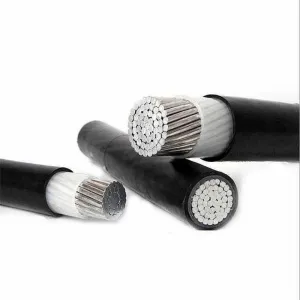
Custom 1.5mm 2.5mm 4mm 6mm 10mm 1/2/3/4/5 Core Copper PVC Wiring Electrical Cable and Wire Price Building Wire
Category: Low voltage cableBrowse number: 392Number:Release time: 2025-07-03 09:19:57This customizable PVC copper wire series offers various sizes from 1.5-10mm² with 1-5 core configurations, featuring oxygen-free copper conductors and flame-retardant PVC insulation compliant with GB5023/IEC60227 standards. With excellent conductivity and safety performance, it's ideal for building wiring, electrical installations and industrial power distribution, available from stock for fast delivery. -
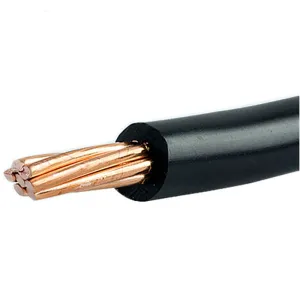
Pvc Insulation Copper Electrical Wiring Earth Wire Cable 2.0mm 5.5mm 8mm 50mm
Category: Building wireBrowse number: 350Number:Release time: 2025-08-26 06:56:29PVC Insulation Copper Electrical Wiring Earth Wire Cable: Essential Safety for Electrical Systems This range of PVC-insulated copper earth wire cables, available in 2.0mm, 5.5mm, 8mm, and 50mm, serves as a critical safety backbone for electrical systems, designed to divert fault currents safely to the ground. Crafted with high-purity copper conductors, they ensure low resistance and efficient conductivity—vital for rapid dissipation of electrical surges, minimizing risks of electric shock, equipment damage, or fires. The PVC insulation layer, engineered for durability, offers robust protection against moisture, abrasion, and temperature extremes (-15°C to 70°C), making it suitable for both indoor and outdoor installations. Its flame-retardant properties add an extra safety barrier, slowing fire spread during electrical faults. The insulation also features clear color coding (typically green/yellow) for instant identification, complying with global safety standards (IEC, UL) to prevent misconnection. Each 规格 (specification) targets specific applications: 2.0mm for residential grounding (appliances, lighting); 5.5mm and 8mm for commercial use (distribution panels, HVAC systems); and 50mm for heavy-industrial settings (power plants, renewable energy facilities). All variants balance flexibility and strength, facilitating easy routing through conduits or tight spaces. Compliant with international codes, these earth wires deliver reliability across residential, commercial, and industrial projects. Their combination of high-conductivity copper, durable PVC, and tailored sizing makes them an indispensable choice for ensuring electrical system integrity and safety. -
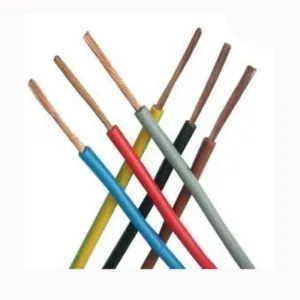
70mm2 Electrical Earthing Cable
Category: Building wireBrowse number: 374Number:Release time: 2025-08-28 07:31:29As a professional manufacturer of electrical safety cables, we are committed to providing high-performance 70mm² Electrical Earthing Cable—a critical component designed to safeguard electrical systems, equipment, and personnel by diverting fault currents to the earth. This cable stands out in industrial, commercial, and large-scale residential projects for its excellent current-carrying capacity, robust mechanical strength, and reliable conductivity, making it an indispensable choice for high-demand earthing applications. The 70mm² cross-sectional area is the core advantage of this earthing cable, enabling it to handle large fault currents (up to 2000A under short-circuit conditions) efficiently. Unlike smaller-gauge earthing cables (such as 25mm² or 50mm²), the 70mm² variant minimizes resistance during fault current diversion, ensuring rapid dissipation of dangerous currents to the ground—this is crucial for preventing electrical shocks, equipment damage, and fire hazards in high-power systems (e.g., industrial machinery, commercial building main switchboards, and renewable energy installations like solar farms). Constructed with high-purity stranded copper conductors (99.95% oxygen-free copper), the cable delivers exceptional conductivity and flexibility. The stranded design, composed of multiple thin copper strands twisted together, allows easy installation in tight spaces, around equipment corners, or across long distances without compromising conductor integrity—solving the rigidity issue of solid-core cables and adapting to complex on-site environments. The cable is also coated with a durable, corrosion-resistant PVC or XLPE (cross-linked polyethylene) insulation layer: PVC insulation offers excellent moisture resistance for indoor or mild outdoor use, while XLPE insulation provides enhanced high-temperature tolerance (up to 90°C continuous use) and UV resistance, making it suitable for harsh outdoor conditions like power transmission towers or outdoor substation earthing systems. Our 70mm² Electrical Earthing Cable complies with international standards such as IEC 60446 (for earthing conductors) and GB 50169 (China’s national standard for earthing engineering), undergoing strict quality testing including resistance measurement, tensile strength verification, and corrosion resistance assessment. These certifications ensure the cable meets the highest safety requirements for long-term, stable operation. As a customer-centric supplier, we offer flexible customization (e.g., adjusting cable length, choosing insulation materials based on application environments) and professional technical support—our team assists clients in calculating earthing system requirements, selecting matching accessories (like earthing clamps and lugs), and providing on-site installation guidance. Whether for new project construction, electrical system upgrades, or safety compliance renovations, our 70mm² Electrical Earthing Cable delivers the safety, reliability, and performance needed to protect electrical infrastructure.
News
Category:
No search results found!
Case
Category:
No search results found!
Video
Category:
No search results found!
Download
Category:
No search results found!
Job
Category:
No search results found!
Featured Products
No search results found!



 Phone
Phone E-mail