
 Español
 Portugues
 Pусский
 Français
 العربية
 ไทย
ไทย Türk dili
 Indonesia
 Tiếng Việt


Underground Construction Cable
Underground construction cable is specifically designed for permanent installation below the surface of the ground to supply power, control signals, or communication between buildings, industrial facilities, and infrastructure systems. Compared with overhead lines, this type of cable offers better protection from weather, accidental contact, and visual impact, making it widely used in modern urban and industrial environments.A typical underground construction cable consists of several main components. At the center is the conductor, commonly made of copper or aluminum, chosen for its electrical conductivity and mechanical strength. The conductor may be solid or stranded, with stranded designs providing greater flexibility and resistance to vibration and bending during installation.Around the conductor, an insulating layer is applied to prevent electrical contact between phases and with the surrounding environment. Common insulation materials include cross-linked polyethylene (XLPE), polyvinyl chloride (PVC), and ethylene propylene rubber (EPR). XLPE is frequently used because of its high temperature rating, good dielectric properties, and long service life. For medium- and high-voltage applications, additional layers such as semi-conductive screens and metallic shields are applied to control the electric field and improve safety.Outside the insulated core, there is often a bedding layer and mechanical protection. Many underground construction cables incorporate steel wire armor (SWA) or steel tape armor to protect against impact, crushing forces, and digging tools. In some cases, non-metallic armoring materials, such as fiberglass, are used when resistance to corrosion or reduced magnetic impact is required. An outer sheath, usually PVC or polyethylene (PE), protects the inner structure from moisture, chemicals, and soil conditions.Underground construction cables are classified by voltage level, conductor size, and specific application. Low-voltage cables are typically used for residential and commercial power distribution, street lighting, and small industrial loads. Medium-voltage cables supply larger buildings, factories, and distribution substations. Specialized control and instrumentation cables can also be installed underground to transmit signals in process plants, transportation tunnels, and utility corridors.Proper installation is critical to ensure longevity and reliability. Cables are usually placed in prepared trenches at a specified depth, sometimes in ducts or conduits, and may be surrounded by sand or fine backfill to avoid mechanical damage. Warning tapes or protective tiles are positioned above the cable route to reduce the risk of accidental excavation damage. Bending radius, pulling tension, and jointing procedures must follow technical standards to prevent insulation stress and conductor damage.Underground construction cables must meet relevant international and national standards regarding electrical performance, fire resistance, environmental behavior, and mechanical strength. When correctly designed, installed, and maintained, they provide a long-service, low-visibility, and highly reliable solution for modern power and signal distribution networks.
Products
Category:
-
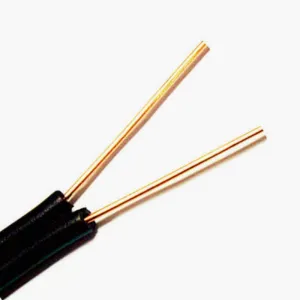
XLPE Insulated PVC Sheathed Copper Conductor Power Cable Underground Construction XLPE Insulated PVC Sheathed Copper Solid
Category: Low voltage cableBrowse number: 344Number:Release time: 2025-07-02 09:56:11XLPE Insulated PVC Sheathed Copper Conductor Power Cable features cross-linked polyethylene (XLPE) insulation and PVC outer sheath, with copper conductors designed for fixed installations such as underground laying. The cable offers excellent high-temperature resistance (90℃ long-term operating temperature), high mechanical strength, and superior environmental aging resistance. Rated at 0.6/1kV, it is widely used in building, industrial, and infrastructure power distribution systems.
News
Category:
No search results found!
Case
Category:
No search results found!
Video
Category:
No search results found!
Download
Category:
No search results found!
Job
Category:
No search results found!
Featured Products
No search results found!



 Phone
Phone E-mail