
 Español
 Portugues
 Pусский
 Français
 العربية
 ไทย
ไทย Türk dili
 Indonesia
 Tiếng Việt


Rubber Power Cable
Rubber power cables are widely used flexible cables designed for reliable power transmission in demanding environments. They are manufactured with rubber insulation and sheathing, which provide excellent mechanical strength, flexibility, and resistance to harsh conditions. These characteristics make them suitable for industrial facilities, construction sites, mining operations, shipyards, outdoor events, and temporary power distribution systems.The conductor of a rubber power cable is typically made from high‑purity copper, either class 5 or class 6 flexible strands, to ensure good conductivity and easy handling. Around the conductor, a high‑grade rubber compound is applied as insulation. Common insulation materials include EPR (ethylene propylene rubber) or other synthetic elastomers formulated to withstand electrical stress, thermal cycling, and aging. The outer sheath is usually a tough rubber compound with enhanced resistance to abrasion, oils, chemicals, and weathering.A key advantage of rubber power cables is their flexibility over a wide temperature range. They remain pliable in low temperatures and do not become excessively soft in high temperatures, which is essential for mobile equipment and frequently moved power tools. Their bending radius is relatively small, allowing installation in confined spaces, around machinery, and on cable reels or drums. This flexibility reduces the risk of conductor damage during installation and use.Mechanical robustness is another important feature. The rubber sheath absorbs shocks and impacts and offers good tear and abrasion resistance. In heavy‑duty types, additional reinforcement layers or textile braids may be included to increase tensile strength and resistance to repeated flexing. This is especially valuable in applications where cables are dragged across rough surfaces or subjected to continuous motion, such as in cranes, conveyor systems, or portable generators.Rubber power cables are also designed to withstand challenging environmental conditions. Many types are UV‑resistant and weather‑resistant, suitable for prolonged outdoor exposure. Oil‑resistant and flame‑retardant formulations are commonly available, meeting various international standards for fire performance and safety. Some versions are halogen‑free and low‑smoke, minimizing toxic and corrosive gas emissions in the event of a fire and making them appropriate for public areas, tunnels, and enclosed spaces.Electrical performance is tailored to the intended voltage class, with common ratings ranging from low‑voltage applications such as 300/500 V and 450/750 V up to 0.6/1 kV and beyond for certain industrial types. The insulation thickness, test voltage, and permissible current‑carrying capacity are defined according to relevant standards. Correct selection requires consideration of operating voltage, environmental temperature, installation method, and applicable safety regulations.In practice, rubber power cables are used for supplying portable tools, welding equipment, lighting systems, temporary site distribution boards, and mobile machinery. Their combination of flexibility, durability, and environmental resistance provides a reliable and safe power connection where conventional rigid cables or standard PVC‑insulated cables would fail prematurely. By choosing the appropriate construction, rating, and protective properties, users can ensure long service life and dependable operation in even the most demanding applications.
Products
Category:
-
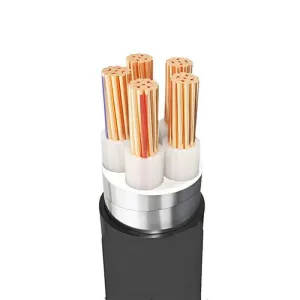
Copper Conductor XLPE Epr Silicone Fire-Resistant Rubber Power Cable for Industrial Construction Marine Overhead Railway Mining
Category: Low voltage cableBrowse number: 389Number:Release time: 2025-07-04 00:30:29This industrial-grade fire-resistant power cable features high-purity copper conductors with XLPE/EPR insulation and silicone rubber sheath, offering exceptional heat resistance (-60℃~180℃), flame retardancy (IEC60331 compliant), and mechanical durability. Ideal for harsh environments like industrial plants, marine applications, overhead lines, railways, and mining, it meets IEC60502 and GB/T12706 standards, combining flexibility with extended service life.
News
Category:
No search results found!
Case
Category:
No search results found!
Video
Category:
No search results found!
Download
Category:
No search results found!
Job
Category:
No search results found!
Featured Products
No search results found!



 Phone
Phone E-mail