
 Español
 Portugues
 Pусский
 Français
 العربية
 ไทย
ไทย Türk dili
 Indonesia
 Tiếng Việt


Outdoor Cable
Outdoor cable is specifically engineered to withstand harsh environmental conditions while providing reliable transmission of power, data, or signals over long distances. Unlike standard indoor cable, it must cope with moisture, temperature variations, ultraviolet (UV) radiation, mechanical stress, and sometimes chemical exposure. For this reason, it is built with reinforced materials and protective layers that maintain performance and safety outdoors.The outer jacket of outdoor cable is typically made from UV‑resistant polyethylene or similar polymers that do not crack or degrade easily when exposed to sunlight. This jacket also provides resistance to rain, snow, and humidity, helping to prevent water ingress. In many designs, there is an additional moisture barrier inside the cable, such as water‑blocking gel or water‑swellable tape, which stops any penetrating moisture from spreading along the cable length.Outdoor power cables are often armored to protect against physical damage. Steel wire armor or corrugated steel tape can shield the conductors from impact, rodent bites, and accidental digging. These cables are commonly buried directly in the ground, laid in ducts, or installed on poles. The conductors are typically made of copper or aluminum with insulation that remains stable under wide temperature ranges and high electrical stress.For communication and networking, outdoor fiber optic cable is widely used. Its design frequently includes a rugged sheath, central strength member, and sometimes a loose‑tube construction filled with gel to protect the fibers from mechanical stress and moisture. These cables can be used for backbone connections between buildings, in campus networks, along transportation routes, and in long‑distance telecommunications. Outdoor copper communication cables, such as twisted pair or coaxial types, are similarly protected with weather‑resistant jackets and sometimes shielding to reduce electromagnetic interference.Selection of the right outdoor cable depends on installation conditions and technical requirements. Key factors include transmission distance, voltage or bandwidth, installation method (aerial, duct, or direct burial), expected mechanical loads, and compliance with regional standards. Safety is also critical; flame‑retardant or low‑smoke, zero‑halogen materials may be needed in certain environments where cables transition from outdoor to indoor spaces.Proper installation greatly affects performance and lifespan. Bend radius must be respected, especially for fiber optic cable, to avoid signal loss or structural damage. Cables should be supported adequately along their route, and joints or terminations must be sealed to prevent moisture entry. Periodic inspection helps identify wear, mechanical damage, or environmental effects before they lead to failure.In modern infrastructure, outdoor cable plays a vital role in power distribution, internet access, industrial control, security systems, and transportation networks. Its robust construction ensures stable operation in demanding conditions, helping to maintain continuous service and reduce maintenance costs over the long term.
Products
Category:
-
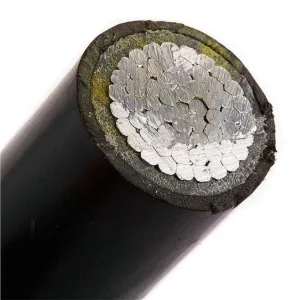
Drop Wire Pure Copper Telephone Outdoor Cable 1 Core 0.71 0.8 0.81 0.91 1.0 1.14 mm
Category: Low voltage cableBrowse number: 350Number:Release time: 2025-07-04 02:39:51single-core outdoor telephone drop wire featuring high-purity copper conductors (available in 0.71-1.14mm diameters). It delivers excellent conductivity and weather resistance, ideal for aerial telephone line installation and outdoor communication networks, particularly suitable for long-distance signal transmission projects. -
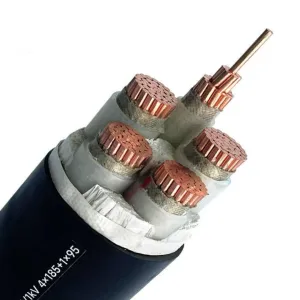
4X25 4X35 4X50 4X70 Avvg Eayy Nayy 1-Ayky Acyy / Acyy-F Outdoor Cable for Transmission and Distribution of Electricity
Category: Low voltage cableBrowse number: 526Number:Release time: 2025-07-25 07:19:02This abstract involves outdoor cables suitable for power transmission and distribution scenarios, covering various specifications and models, including core specifications such as 4X25, 4X35, 4X50, 4X70, as well as model designations like Avvg, Eayy, Nayy, 1-Ayky, Acyy, and Acyy-F. These cables are mainly used in outdoor power transmission and distribution systems and can meet the power transmission requirements under different power levels and laying environments. Among them, specifications represented by "4X + number" such as 4X25 and 4X35 focus on clarifying the conductor structure and cross-sectional area of the cable. The number indicates the cross-sectional area of a single conductor (usually in square millimeters), and "4X" means the cable contains 4 conductors of this specification. Such designations intuitively reflect the current-carrying capacity of the cable, which can be selected according to the power transmission and distribution capacity requirements. Letter models such as Avvg and Eayy are generally related to the insulation material, sheath material, and protective performance of the cable. For example, some models may use weather-resistant insulation materials or anti-corrosion sheaths, which are suitable for complex outdoor environments (such as open-air, humid, and large temperature difference scenarios). Models Acyy and Acyy-F may have specific designs in terms of protection level and temperature resistance, further improving the stability and safety of outdoor use. Overall, this series of outdoor cables can meet the needs of different power transmission and distribution scenarios through diversified specifications and model designs, providing support for the stable operation of outdoor power systems.
News
Category:
No search results found!
Case
Category:
No search results found!
Video
Category:
No search results found!
Download
Category:
No search results found!
Job
Category:
No search results found!
Featured Products
No search results found!



 Phone
Phone E-mail