
 Español
 Portugues
 Pусский
 Français
 العربية
 ไทย
ไทย Türk dili
 Indonesia
 Tiếng Việt


Industrial Power Conductor
Industrial power conductors are critical components in modern electrical systems, designed to transmit large amounts of power safely, efficiently, and reliably in demanding environments. They are widely used in applications such as power plants, substations, manufacturing facilities, data centers, transportation infrastructure, mining operations, and large commercial buildings. Their performance directly affects system efficiency, operational safety, and long‑term reliability.The core of an industrial power conductor is typically made from high‑conductivity materials such as copper or aluminum. Copper offers excellent electrical and thermal conductivity, mechanical strength, and resistance to creep, making it suitable for heavy‑duty and high‑reliability applications. Aluminum conductors, while slightly less conductive, are lighter and more cost‑effective, and are therefore commonly used in overhead lines and large busbar systems where weight reduction and economic efficiency are priorities.Industrial power conductors may be solid or stranded. Stranded conductors, formed by twisting multiple wires together, provide enhanced flexibility and vibration resistance, which is essential in installations exposed to mechanical movement or thermal cycling. The design and stranding pattern are optimized to balance conductivity, flexibility, and mechanical robustness.Insulation and jacketing play a crucial role in industrial environments. Depending on the voltage rating and operating conditions, insulation materials may include cross‑linked polyethylene (XLPE), ethylene propylene rubber (EPR), polyvinyl chloride (PVC), and other specialized polymers. These materials are selected for their dielectric strength, thermal stability, flame retardance, and resistance to oils, chemicals, moisture, and abrasion. In medium‑ and high‑voltage applications, additional layers such as semiconductive screens, metallic shields, and armor can be incorporated to control electric fields, provide grounding paths, and protect against mechanical damage.Thermal performance is a key design consideration. Industrial power conductors must handle continuous and short‑term overload currents without exceeding allowable temperature limits that could degrade insulation or accelerate aging. Ampacity calculations account for conductor material, cross‑sectional area, installation method, ambient temperature, grouping of cables, and soil or air thermal properties. Proper sizing and derating ensure safe operation and reduce the risk of insulation failure or fire.Industrial environments often impose harsh mechanical and chemical conditions. Cables may be exposed to UV radiation, moisture, hydrocarbons, solvents, aggressive chemicals, high temperatures, or physical impact. Specialized sheathing compounds and armor layers, such as steel tape or wire armor, are employed to maintain integrity under these conditions. For dynamic applications like cable reels, drag chains, and mobile equipment, the conductors are engineered for repeated flexing, torsion, and bending without fatigue.Compliance with international and regional standards is essential. Industrial power conductors are designed and tested according to specifications such as IEC, IEEE, NEC, and various national standards. These cover aspects including conductor construction, insulation performance, flame propagation, smoke emission, halogen content, and test procedures for electrical, thermal, and mechanical properties.With growing emphasis on energy efficiency and system reliability, modern industrial power conductors are also being optimized for reduced losses, improved thermal behavior, and ease of installation and maintenance. Advancements in materials, manufacturing processes, and monitoring technologies continue to enhance their performance, supporting the reliable delivery of electrical power in increasingly complex and mission‑critical industrial infrastructures.
Products
Category:
-
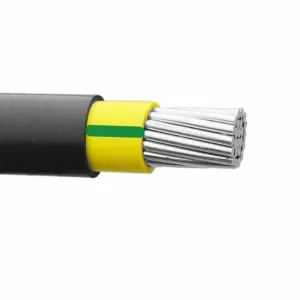
High Quality Industrial Low Voltage Power Cable N2xy Na2xy Na2xry N2xry XLPE Insulated PVC Sheathed Copper Aluminum Conductor
Category: Low voltage cableBrowse number: 349Number:Release time: 2025-07-01 02:45:20This product is a high-quality industrial low-voltage power cable, with models including N2XY, NA2XY, NA2XRY, and N2XRY. It features cross-linked polyethylene (XLPE) insulation and polyvinyl chloride (PVC) sheathing, with copper or aluminum conductors. Designed for industrial low-voltage power distribution systems, the cable offers excellent electrical performance, heat resistance, mechanical strength, and environmental durability. Suitable for both fixed installations and flexible applications, it is widely used in power transmission, equipment supply, and industrial infrastructure.
News
Category:
No search results found!
Case
Category:
No search results found!
Video
Category:
No search results found!
Download
Category:
No search results found!
Job
Category:
No search results found!
Featured Products
No search results found!



 Phone
Phone E-mail