
 Español
 Portugues
 Pусский
 Français
 العربية
 ไทย
ไทย Türk dili
 Indonesia
 Tiếng Việt


High Quality Conductor
A high quality conductor is a carefully engineered metallic material designed to transport electrical current with minimal resistance, heat loss, and degradation over time. Its performance depends on a combination of intrinsic electrical properties, precise composition control, manufacturing processes, and protective measures against environmental influences.The foundation of a high quality conductor is excellent electrical conductivity. This is usually achieved using refined metals such as copper or aluminum with very low impurity levels and controlled grain structure. Low resistivity allows current to flow efficiently, reducing I²R losses, improving system efficiency, and minimizing energy waste. In many applications, conductivity is enhanced further through alloy optimization, heat treatment, and surface finishing to ensure consistent performance across varying temperatures and load conditions.Mechanical strength and flexibility are equally important. A high quality conductor must withstand bending, vibration, thermal cycling, and installation stresses without cracking or permanent deformation. This balance is often obtained by drawing the metal into precisely dimensioned strands and then stranding or bunching them into a flexible bundle. The resulting conductor can be routed through complex pathways, wound onto reels, and pulled through conduits while maintaining structural integrity and stable electrical characteristics.Thermal performance is a critical factor. During operation, current flow naturally generates heat. A superior conductor effectively dissipates this heat through its metallic body and surrounding insulation system, keeping operating temperatures within safe limits. Stable performance at elevated temperatures reduces the risk of insulation damage, conductor creep, and long‑term fatigue. High quality designs consider current‑carrying capacity, ambient temperature, ventilation, and installation methods to ensure reliable operation under rated and overload conditions.Another defining feature is long‑term reliability and durability. Advanced conductors are protected against oxidation, moisture, chemicals, and mechanical abrasion. Tin, nickel, or silver coatings may be used to enhance corrosion resistance and solderability. When combined with robust insulation systems, such as cross‑linked polymers or heat‑resistant elastomers, the conductor can operate for many years in harsh industrial, automotive, marine, and energy environments without significant loss of performance.Dimensional precision and manufacturing consistency also distinguish high quality conductors. Tight tolerances on diameter, concentricity, and stranding geometry ensure predictable resistance, uniform current distribution, and compatibility with connectors, terminals, and automated assembly equipment. Rigorous quality control programs test electrical resistance, elongation, tensile strength, flexibility, and surface finish to verify that each production batch meets stringent technical specifications.Finally, a high quality conductor reflects responsible engineering in terms of safety and standards compliance. It is typically designed and tested in accordance with recognized international and regional standards governing voltage class, flame retardancy, smoke and toxicity, insulation coordination, and environmental performance. This alignment provides assurance that the conductor can be confidently integrated into critical systems such as power distribution, renewable energy installations, transportation networks, and communication infrastructure, where reliability and safety are paramount.
Products
Category:
-
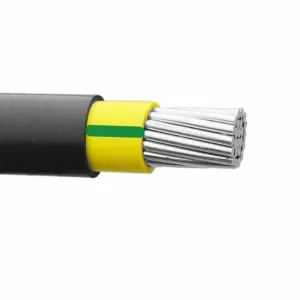
High Quality Industrial Low Voltage Power Cable N2xy Na2xy Na2xry N2xry XLPE Insulated PVC Sheathed Copper Aluminum Conductor
Category: Low voltage cableBrowse number: 350Number:Release time: 2025-07-01 02:45:20This product is a high-quality industrial low-voltage power cable, with models including N2XY, NA2XY, NA2XRY, and N2XRY. It features cross-linked polyethylene (XLPE) insulation and polyvinyl chloride (PVC) sheathing, with copper or aluminum conductors. Designed for industrial low-voltage power distribution systems, the cable offers excellent electrical performance, heat resistance, mechanical strength, and environmental durability. Suitable for both fixed installations and flexible applications, it is widely used in power transmission, equipment supply, and industrial infrastructure.
News
Category:
No search results found!
Case
Category:
No search results found!
Video
Category:
No search results found!
Download
Category:
No search results found!
Job
Category:
No search results found!
Featured Products
No search results found!



 Phone
Phone E-mail