
 Español
 Portugues
 Pусский
 Français
 العربية
 ไทย
ไทย Türk dili
 Indonesia
 Tiếng Việt


Flexible Aluminum Cable
Flexible aluminum cable is a lightweight, high‑performance conductor designed for applications where both electrical efficiency and mechanical flexibility are required. Compared with traditional rigid conductors, it offers easier installation, reduced overall system weight, and competitive electrical properties, making it suitable for modern power distribution, renewable energy systems, transportation, and building wiring.At the core of this cable is a high‑purity aluminum conductor, usually stranded to increase flexibility and fatigue resistance. Multiple fine wires are twisted together to form a conductor that bends easily without cracking or breaking. In many designs, the aluminum is alloyed and specially tempered to improve strength, creep resistance, and durability, helping the cable withstand repeated movement, vibration, and mechanical stress.The conductor is insulated with high‑grade polymer materials such as cross‑linked polyethylene (XLPE), polyethylene (PE), or thermoplastic elastomers, selected according to the required temperature rating and environmental conditions. These insulation compounds offer excellent dielectric strength, thermal stability, and resistance to moisture, chemicals, and abrasion. For outdoor or industrial use, additional sheathing and protective layers may be applied to guard against UV radiation, oil, and mechanical impact.Flexible aluminum cable is valued for its favorable weight‑to‑conductivity ratio. Aluminum is significantly lighter than copper, which reduces the load on supporting structures, simplifies routing in cable trays, and lowers transport and handling costs. This makes it particularly suitable for large cross‑section conductors in substations, solar farms, wind power installations, and data center power feeds, where numerous long cable runs are common.Thermal performance is another important characteristic. Properly designed flexible aluminum cables can carry substantial current while controlling temperature rise within defined limits. The combination of high‑conductivity aluminum and advanced insulation enables efficient heat dissipation and reliable long‑term operation. In many applications, the cost advantage of aluminum, combined with its acceptable current‑carrying capacity, offers a compelling alternative to copper conductors.Installation benefits are significant. The flexibility of the stranded aluminum conductor allows tighter bending radii compared with solid conductors, which is especially useful in confined spaces, complex routing paths, switchgear connections, and mobile equipment. Reduced stiffness means less force is needed when pulling the cable through conduits or trays, helping to shorten installation time and lower labor costs. Proper connectors and terminations, specifically designed for aluminum, ensure secure electrical contact and minimize contact resistance.Safety and standards compliance are essential aspects of flexible aluminum cable design. Typical products are tested and produced in accordance with international or regional standards governing conductor properties, insulation performance, flammability, smoke emission, and mechanical endurance. Flame‑retardant or low‑smoke, halogen‑free versions are available for use in public buildings, transportation infrastructure, and other environments where fire safety is critical.Overall, flexible aluminum cable combines low weight, good electrical performance, and mechanical adaptability. It supports energy‑efficient power transmission and distribution while addressing practical requirements for easier handling, economical installation, and long‑term reliability across a broad range of electrical and industrial applications.
Products
Category:
-
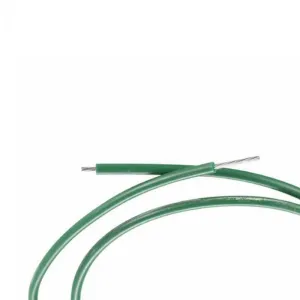
Strip Power Cable Core Galvanised Steel A2xfy/2xfy-A2xwy/2xwy- 3.5 Flexible Aluminum XLPE Swa PVC Power Cable 240 Sq mm Copper
Category: Low voltage cableBrowse number: 325Number:Release time: 2025-07-03 08:08:23This document describes a flexible power cable featuring a 240 sq mm copper conductor, insulated with cross-linked polyethylene (XLPE) for enhanced thermal and electrical performance. The cable includes a galvanized steel wire armor (SWA) for mechanical protection and is sheathed with PVC for durability. The core configuration follows the standards A2XFy/2XFy-A2XWy/2XWy-3.5, indicating a design with multiple layers for optimal power transmission and structural integrity. Suitable for industrial and heavy-duty applications, this cable combines flexibility, high conductivity (copper), and robust protection (steel armor + PVC) for reliable performance in demanding environments. -

Yjv Yjy Cu/XLPE/PVC Flexible Aluminum Cable, Aluminum Flexible Power Cable
Category: Low voltage cableBrowse number: 316Number:Release time: 2025-07-24 08:26:12YJV and YJY aluminum core cables are flexible aluminum power cables with aluminum conductors, XLPE (cross - linked polyethylene) insulation layers, and PVC (polyvinyl chloride) and XLPE sheaths respectively. These cables have good flexibility, which is convenient for laying and installation, especially suitable for scenarios with limited space or requiring bending and laying. The XLPE insulation layer has excellent insulation performance and good temperature resistance, which can ensure stable power transmission; the PVC sheath has certain corrosion resistance and wear resistance, while the XLPE sheath of YJY has more advantages in weather resistance and other aspects. They can be used for low - voltage power transmission in industrial, construction and other fields to meet relevant power demand.
News
Category:
No search results found!
Case
Category:
No search results found!
Video
Category:
No search results found!
Download
Category:
No search results found!
Job
Category:
No search results found!
Featured Products
No search results found!



 Phone
Phone E-mail