
 Español
 Portugues
 Pусский
 Français
 العربية
 ไทย
ไทย Türk dili
 Indonesia
 Tiếng Việt


Copper Conductor Power Cable
Copper conductor power cables are widely used in residential, commercial, and industrial electrical installations because of their excellent conductivity, reliability, and mechanical strength. Copper, as a highly conductive metal, allows efficient transmission of electrical energy with relatively low power loss and good thermal performance. These features make copper conductor power cables suitable for both low-voltage and medium-voltage applications, including power distribution networks, motor and transformer connections, building wiring, and underground or outdoor installations.A typical copper conductor power cable consists of several key components. At the core is the copper conductor, which may be single-core or multi-core, and can be solid or stranded. Stranded conductors improve flexibility and ease of installation, especially in complex routing paths or confined spaces. Around the conductor is an insulating layer, usually made from materials such as PVC, XLPE, or rubber. This insulation prevents short circuits, ensures electrical safety, and provides resistance to heat, moisture, and chemical exposure.In many designs, an additional bedding or inner sheath is applied over the insulation to provide mechanical protection and to maintain the cable’s shape. Some power cables incorporate metallic screens or shields, such as copper tape or wire screens, to control electromagnetic interference and improve fault detection characteristics. For environments where mechanical impact or moisture ingress is a concern, an armor layer made of steel wires or steel tapes may be used. Finally, an outer sheath protects the internal components from abrasion, UV radiation, chemicals, and environmental stress.Copper conductor power cables are classified by voltage rating, conductor size, insulation type, and installation method. They are designed to withstand specified operating temperatures and short-circuit conditions without degradation. When selecting such a cable, engineers consider current-carrying capacity, permissible voltage drop, environmental conditions, installation method, and relevant safety standards. Proper selection ensures safe operation, energy efficiency, and long service life.These cables are manufactured in accordance with international and regional standards that define conductor construction, insulation thickness, test methods, and performance requirements. Routine tests include conductor resistance, insulation resistance, high-voltage withstand testing, and checks for dimensional accuracy. Compliance with these standards ensures that copper conductor power cables can perform reliably in demanding electrical systems, supporting stable power supply and reducing the risk of failure or fire hazards.
Products
Category:
-
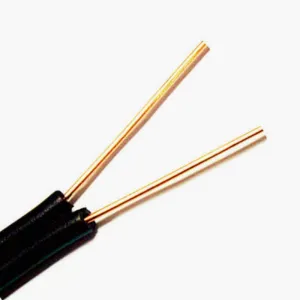
XLPE Insulated PVC Sheathed Copper Conductor Power Cable Underground Construction XLPE Insulated PVC Sheathed Copper Solid
Category: Low voltage cableBrowse number: 346Number:Release time: 2025-07-02 09:56:11XLPE Insulated PVC Sheathed Copper Conductor Power Cable features cross-linked polyethylene (XLPE) insulation and PVC outer sheath, with copper conductors designed for fixed installations such as underground laying. The cable offers excellent high-temperature resistance (90℃ long-term operating temperature), high mechanical strength, and superior environmental aging resistance. Rated at 0.6/1kV, it is widely used in building, industrial, and infrastructure power distribution systems.
News
Category:
No search results found!
Case
Category:
No search results found!
Video
Category:
No search results found!
Download
Category:
No search results found!
Job
Category:
No search results found!
Featured Products
No search results found!



 Phone
Phone E-mail