
 Español
 Portugues
 Pусский
 Français
 العربية
 ไทย
ไทย Türk dili
 Indonesia
 Tiếng Việt


Copper Cable Power Stations
Copper cable power stations are facilities where electrical energy is generated, transformed, and transmitted using copper-based conductors as the main medium for power flow. Copper cables play a key role in these stations because of their excellent electrical conductivity, mechanical strength, and long-term reliability under demanding operating conditions.Within a power station, copper cables are used in several critical sections. At the generator output, high-capacity copper conductors connect generators to step-up transformers, which raise the voltage for transmission over longer distances. Copper’s low electrical resistance reduces losses and heat buildup at this stage, improving overall efficiency. In switchyards and control areas, copper cables connect breakers, busbars, measuring devices, and protection systems, ensuring accurate sensing and reliable control of power flows.Copper cable power stations often operate across a range of voltages, from medium-voltage distribution within the plant to high- or extra-high-voltage transmission leaving the site. Insulated copper cables are selected based on voltage rating, current-carrying capacity, and environmental conditions such as temperature, moisture, and chemical exposure. Cross-linked polyethylene (XLPE) or other advanced insulation materials are commonly combined with copper conductors to achieve high reliability, even under thermal and mechanical stress.Safety and protection are central aspects of these installations. Copper cables must withstand short-circuit currents, voltage surges, and mechanical impacts without catastrophic failure. Stations employ comprehensive grounding and bonding systems based on copper conductors to maintain safe touch voltages, provide effective fault current paths, and protect both equipment and personnel. Copper’s corrosion resistance and stable conductivity over time support consistent performance of these safety systems.From an operational perspective, copper cable power stations emphasize efficient layout and careful routing of cables. Cable trays, ducts, and underground conduits are designed to minimize electromagnetic interference, overheating, and mechanical damage. Thermal management is crucial: ampacity calculations consider ambient temperature, soil conditions, cable grouping, and installation depth, ensuring that copper conductors operate within safe temperature limits.Maintenance practices include regular inspection, thermal imaging, insulation resistance testing, and partial discharge monitoring. Because copper maintains its conductivity and structural integrity over long periods, it reduces the frequency of replacement and unplanned outages. When components reach end of life, copper conductors can be recovered and recycled, contributing to resource efficiency and reduced environmental impact.As power systems integrate more renewable generation, copper cable power stations are adapting to variable loads and bidirectional power flows. Their cable systems must handle frequent changes in current, increased switching operations, and more complex protection schemes. Copper’s robustness makes it well suited to these evolving conditions, supporting stable, efficient, and secure operation in modern electrical networks.
Products
Category:
-
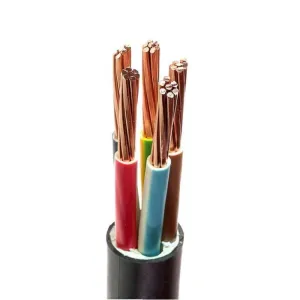
16mm2 Ug Power Cable 0.6/1kv Copper Cable with XLPE Insulation Material for Power Stations
Category: Low voltage cableBrowse number: 394Number:Release time: 2025-07-03 06:55:4816mm² UG-type power cable rated at 0.6/1kV, specifically designed for power stations and demanding environments. Featuring high-purity copper conductors and XLPE (cross-linked polyethylene) insulation, it ensures excellent electrical performance and long-term operational reliability. Compliant with IEC 60502 and GB/T 12706 standards, the cable offers high temperature resistance, corrosion resistance and superior mechanical strength, making it ideal for power station internal distribution, transformer connections and various fixed installations. Key Features: Conductor: Class 2 stranded copper with high conductivity Insulation: XLPE material, 90℃ temperature rating Voltage Rating: 0.6/1kV Installation: Suitable for direct burial, cable trenches etc. Environmental Resistance: Chemical/water resistant, anti-aging Applications: ✓ Power station main distribution systems ✓ Substation equipment connections ✓ Generator set wiring ✓ Industrial plant power distribution
News
Category:
No search results found!
Case
Category:
No search results found!
Video
Category:
No search results found!
Download
Category:
No search results found!
Job
Category:
No search results found!
Featured Products
No search results found!



 Phone
Phone E-mail