
 Español
 Portugues
 Pусский
 Français
 العربية
 ไทย
ไทย Türk dili
 Indonesia
 Tiếng Việt


Aluminum Underground Cables
Aluminum underground cables are widely used in modern power distribution systems due to their favorable balance of performance, cost, and weight. These cables are designed to be buried directly in the ground or installed in ducts, providing a safe and reliable means of transmitting electrical energy in residential, commercial, and industrial environments.The core conductor of these cables is made of aluminum or aluminum alloys. Aluminum has a lower electrical conductivity than copper, but it is significantly lighter and usually more economical. To compensate for the lower conductivity, aluminum underground cables typically have a larger cross‑sectional area than equivalent copper cables, allowing them to carry comparable currents while remaining cost‑effective. The reduced weight of aluminum also simplifies transportation, handling, and installation, particularly over long distances or in difficult terrain.Construction of an aluminum underground cable generally includes several key layers. At the center is the stranded aluminum conductor, which may be compacted to reduce overall diameter. This is surrounded by an insulating layer, often made from cross‑linked polyethylene (XLPE) or similar polymers that provide excellent dielectric strength, thermal resistance, and aging performance. For medium‑ and high‑voltage applications, semiconductive screens are applied over the conductor and insulation to control the electric field and reduce stress concentrations.Outside the insulation system, metallic screens or concentric neutral wires may be used to provide a return path for fault currents and to limit electromagnetic interference. A bedding layer and sometimes armor, such as steel tape or wire, can be added to protect the cable from mechanical damage, rodent attacks, and other external influences. Finally, an outer sheath made from robust materials like PVC or polyethylene shields the internal components from moisture, chemicals, and abrasion present in the soil.Thermal performance is an important consideration. Since underground cables dissipate heat through the surrounding soil, the thermal resistivity of the backfill and native ground affects current‑carrying capacity. Proper installation practices, including correct burial depth, spacing between circuits, and selection of suitable backfill, help ensure that aluminum underground cables operate within their allowable temperature limits and maintain long service life.From a safety perspective, burying power cables eliminates many of the hazards associated with overhead lines, such as exposure to weather, risk of accidental contact, and visual impact. Aluminum underground cables are tested for dielectric strength, insulation resistance, and mechanical robustness to meet relevant international standards. When correctly designed, installed, and maintained, they provide reliable, long‑term operation with relatively low maintenance requirements.In summary, aluminum underground cables combine lightweight construction and economic advantages with sound electrical and mechanical performance. Their use supports the expansion and modernization of power networks, especially in urban areas where space is limited, reliability is critical, and aesthetic or environmental considerations favor underground solutions.
Products
Category:
-
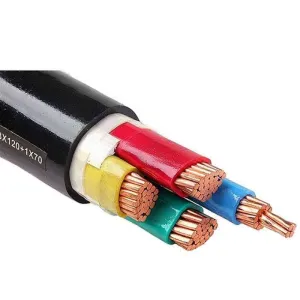
H1 Xdv-as/Ar Power Cables NF C 33-210 Aluminum Underground XLPE Insulated 3X95+1X70 3X150+1X95 0.6/1kv 16A/30A Rated Current
Category: Low voltage cableBrowse number: 462Number:Release time: 2025-07-01 03:37:39the technical specifications of XDV-AS/AR power cables, compliant with French standard NF C 33-210. Designed for underground installation, the cables feature aluminum conductors and XLPE insulation, available in two configurations: 3×95+1×70mm² and 3×150+1×95mm², with rated voltage of 0.6/1kV and current ratings of 16A/30A respectively. The cables demonstrate excellent electrical performance and environmental adaptability, making them ideal for underground power distribution in municipal and industrial applications. Key features include lightweight aluminum conductors, high-temperature resistant XLPE insulation (90℃ continuous operation), superior waterproofing and mechanical protection, as well as international standard-compliant fire resistance.
News
Category:
No search results found!
Case
Category:
No search results found!
Video
Category:
No search results found!
Download
Category:
No search results found!
Job
Category:
No search results found!
Featured Products
No search results found!



 Phone
Phone E-mail