
 Español
 Portugues
 Pусский
 Français
 العربية
 ไทย
ไทย Türk dili
 Indonesia
 Tiếng Việt


Aluminum Core Cable
Aluminum core cable is an electrical cable in which the main conductive element is made of aluminum rather than copper. It is widely used in power distribution, building wiring, industrial installations, and overhead transmission lines due to its favorable balance of weight, cost, and performance. In many medium‑ and low‑voltage applications, aluminum core cable offers an efficient and economical alternative to traditional copper conductors.Aluminum has a lower density than copper, which makes aluminum core cables significantly lighter for the same current‑carrying capacity. This reduction in weight simplifies transportation, handling, and installation, especially in large projects such as residential developments, commercial complexes, and utility networks. The lighter weight also allows for longer spans in overhead lines and reduces mechanical stress on support structures, towers, and cable trays.One of the main advantages of aluminum core cable is its lower material cost. Aluminum is generally less expensive and more abundant than copper, which translates into savings for large‑scale power distribution systems and infrastructure projects. For long cable runs or high‑capacity feeders, the cost difference can be substantial. This economic benefit often makes aluminum the preferred choice for utilities and contractors when designing new networks or upgrading existing systems.In terms of electrical properties, aluminum has a higher resistivity than copper, meaning that a larger cross‑section is required to carry the same current with similar losses. Modern aluminum core cables are therefore carefully sized to meet current‑carrying and voltage‑drop requirements. When correctly designed, they can achieve comparable performance to copper cables for many common applications, particularly in low and medium voltage distribution.Aluminum core cables are usually manufactured with stranded conductors to improve flexibility and ease of installation. They are insulated with materials such as cross‑linked polyethylene (XLPE), polyvinyl chloride (PVC), or other specialized polymers, depending on voltage rating, environmental conditions, and fire performance requirements. Some designs include additional layers such as screens, armoring, or sheathing for mechanical protection, electromagnetic shielding, or resistance to moisture and chemicals.A known characteristic of aluminum is its tendency to form an oxide layer on the surface. While this oxide provides corrosion resistance, it can increase contact resistance at terminations if not properly managed. To ensure safe and reliable connections, specific installation practices are followed, including the use of suitable connectors, proper surface preparation, oxide‑inhibiting compounds, and accurately torqued clamping devices. Modern termination systems are designed to accommodate the thermal expansion and mechanical properties of aluminum to maintain stable, long‑term electrical contact.Aluminum core cable must comply with relevant international and national standards that define requirements for conductor construction, insulation type, current rating, temperature limits, and testing procedures. These standards help ensure safety, durability, and compatibility with switchgear, transformers, and protection devices. Typical applications include underground distribution networks, service entrances, feeder circuits in buildings, industrial power supplies, and overhead lines in urban and rural grids.With continuing improvements in materials, manufacturing techniques, and connector technology, aluminum core cables have become a dependable solution for many power transmission and distribution needs. They provide an effective combination of lightweight construction, cost efficiency, and acceptable electrical performance, making them a key component in modern electrical infrastructure.
Products
Category:
-
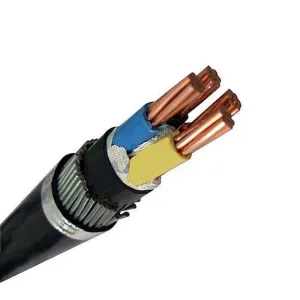
Nh-Vly (Al) Low Voltage Electrical Cable Aluminum Core with XLPE Insulated PVC Sheath Fire Resistant 3*240+1*120mm2 PE Sheathed
Category: Low voltage cableBrowse number: 338Number:Release time: 2025-07-03 02:23:40NH-VLY (Al) fire-resistant cable features aluminum conductors (3×240mm²+1×120mm²) with XLPE insulation and flame-retardant PVC sheath, complying with IEC 60502 & GB/T 19666. Passes 750℃×90min fire test for critical applications like emergency power systems. Key Features Fire resistance: Mica tape+XLPE composite insulation meets IEC 60331 Safety: Halogen-free PE sheath with ≥60% light transmittance when burning Cost-effective: Aluminum core reduces 30% cost, 425A ampacity (40℃ ambient) Durability: -20℃~70℃ operating range, suitable for direct burial/cable tray Applications High-rise building fire protection systems Subway tunnel emergency lighting Petrochemical plant safety circuits -
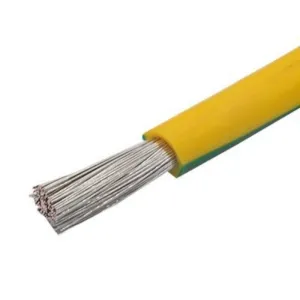
Aluminum Core, Single-Stranded, PVC Insulated, PVC Sheathed Cable for Indoor/Outdoor Electrical Power Wiring
Category: Building wireBrowse number: 350Number:Release time: 2025-09-04 03:00:37This cable is a versatile electrical power wiring solution designed for both indoor and outdoor applications, characterized by its specific structural components and functional attributes. At its core is a single-stranded aluminum conductor, chosen for its unique combination of properties that make it suitable for electrical power transmission. Aluminum is notably lightweight compared to other common conductors like copper, which simplifies handling during installation, reduces the overall weight of the wiring system, and can lower transportation costs. Additionally, aluminum offers good electrical conductivity, ensuring efficient transmission of electrical power with minimal energy loss, though its conductivity is slightly lower than that of copper. This trade-off is often balanced by aluminum’s cost-effectiveness, making the cable an economical choice for various projects. The aluminum core is encased in a PVC (polyvinyl chloride) insulation layer, a critical component that serves multiple essential functions. PVC is an excellent insulator, preventing the flow of electricity from the conductor to unintended surfaces or adjacent conductors, thereby reducing the risk of short circuits, electric shocks, and other electrical hazards. Beyond its insulating properties, PVC insulation provides robust protection against physical damage, such as abrasions and impacts, which can occur during installation or throughout the cable’s operational life. It also exhibits resistance to a range of environmental factors, including moisture, chemicals, and UV radiation to some extent, depending on the specific formulation of the PVC. This resistance helps maintain the integrity of the insulation over time, ensuring consistent performance even in challenging conditions. Surrounding the insulated core is a PVC sheathing, which acts as an additional layer of protection, enhancing the cable’s durability and suitability for both indoor and outdoor use. The sheathing provides extra mechanical strength, shielding the inner components from more severe physical stress, such as crushing or tearing. It also reinforces the cable’s resistance to environmental elements: outdoors, it helps protect against exposure to rain, snow, and extreme temperatures, while indoors, it can resist damage from dust, oils, and other substances commonly found in residential, commercial, or industrial settings. The PVC sheathing is typically designed to be flexible, allowing the cable to be bent and routed easily around obstacles during installation, which adds to its practicality. The cable’s designation for both indoor and outdoor use underscores its adaptability to diverse environments. Indoors, it can be used in residential wiring (such as connecting outlets, light fixtures, and appliances), commercial buildings (for powering office equipment, HVAC systems, and lighting), and industrial facilities (for machinery and power distribution). Outdoors, its applications include underground wiring (where the sheathing protects against soil pressure and moisture), overhead installations (withstanding exposure to weather conditions), and wiring for outdoor equipment like pumps, signage, and landscaping features. However, it is important to note that while PVC offers some UV resistance, prolonged and direct exposure to intense sunlight may still affect its longevity, so in highly exposed outdoor settings, additional protective measures (such as conduit) might be recommended depending on local electrical codes and standards. In terms of performance, the cable is engineered to meet specific electrical and safety standards to ensure reliability and compliance. It is rated for certain voltage levels, which dictates the maximum electrical potential it can safely carry, and is designed to operate within a specified temperature range, ensuring that it does not overheat under normal load conditions. Compliance with industry standards, such as those set by organizations like the International Electrotechnical Commission (IEC) or national bodies (e.g., NEC in the United States), guarantees that the cable has undergone rigorous testing to verify its insulation resistance, current-carrying capacity, flame retardancy, and other critical parameters. Flame retardancy is a particularly important feature of PVC, as it helps slow the spread of fire and reduces the release of toxic fumes, enhancing overall safety in the event of a fire. Installation of this cable is facilitated by its design features. The single-stranded conductor simplifies termination, as it can be easily connected to terminals, switches, or other devices without the need for complex stranding adjustments. The flexibility of the PVC layers allows for straightforward routing through walls, ceilings, conduits, or trenches, minimizing installation time and effort. However, proper installation practices must be followed, including ensuring correct sizing for the intended current load (to prevent overheating), using appropriate connectors compatible with aluminum conductors (to avoid issues like galvanic corrosion), and adhering to local electrical codes regarding burial depth (for underground use), clearance from other utilities, and protection against physical damage. Maintenance of the cable is relatively minimal due to the durability of its components. Regular inspections to check for signs of damage to the sheathing or insulation (such as cracks, cuts, or degradation) are recommended to identify potential issues early. If damage is detected, prompt repairs or replacement may be necessary to prevent electrical failures. The PVC materials are generally resistant to degradation over time, but factors like extreme temperature fluctuations, prolonged exposure to harsh chemicals, or mechanical stress can accelerate wear, making periodic checks essential for ensuring the cable’s long-term performance. In summary, the aluminum core, single-stranded, PVC insulated, PVC sheathed cable is a practical, cost-effective, and versatile solution for indoor and outdoor electrical power wiring. Its combination of a lightweight and economical aluminum conductor, protective PVC insulation, and durable PVC sheathing ensures efficient power transmission, safety, and adaptability to a wide range of environments. Whether used in residential, commercial, or industrial settings, this cable provides a reliable means of delivering electrical power while balancing performance, cost, and ease of installation.
News
Category:
No search results found!
Case
Category:
No search results found!
Video
Category:

Download
Category:
No search results found!
Job
Category:
No search results found!
Featured Products
No search results found!



 Phone
Phone E-mail