
 Español
 Portugues
 Pусский
 Français
 العربية
 ไทย
ไทย Türk dili
 Indonesia
 Tiếng Việt


16mm solar
A 16 mm solar product typically refers to a compact photovoltaic unit or cell with a key dimension of 16 millimeters, designed for small-scale, low‑power applications. Despite its small size, it is built on the same physical principles as large solar panels, converting sunlight directly into electricity through the photovoltaic effect. When photons from sunlight strike the semiconductor material inside the cell, they transfer energy to electrons, creating an electric current that can be harnessed for practical use.The semiconductor in a 16 mm solar device is often crystalline silicon, although thin‑film materials and emerging high‑efficiency compounds are also used. The active layer is doped to form a p‑n junction, which creates an internal electric field. Metal contacts on the front and back of the cell collect the generated current. An anti‑reflective coating is usually applied to the surface to increase light absorption and reduce losses due to reflection, which is especially important for such a small active area.These compact solar units are typically integrated into portable electronics, sensors, and wearables. For example, they can power wireless environmental sensors placed in remote locations, where replacing batteries frequently would be costly or impractical. In consumer products, they may be embedded into devices such as solar‑assisted watches, calculators, or trackers, extending battery life or even enabling completely battery‑free operation under sufficient light.Mechanical and environmental durability are critical for 16 mm solar components. They are often encapsulated in transparent, weather‑resistant materials to protect against moisture, dust, and mechanical impact. The encapsulation must balance robustness with high optical transmission so that as much light as possible reaches the cell. The small size allows mounting on curved or limited surfaces, making them suitable for integration into compact housings, flexible substrates, or custom enclosures.Electrical design around a 16 mm cell needs careful consideration. A single unit produces a relatively low voltage and current, so multiple cells are often connected in series or parallel to meet specific power requirements. Charge management circuits, including voltage regulators and storage elements like rechargeable batteries or supercapacitors, are commonly added. These circuits stabilize the output, store excess energy, and protect connected electronics from fluctuations in illumination.Efficiency, temperature behavior, and spectral response also matter. Under standard test conditions, a well‑designed small cell can achieve respectable conversion efficiency, though absolute power output remains modest due to its limited area. Designers must account for performance drops in low light and at higher temperatures, especially when the device is sealed in compact housings that may trap heat.Overall, a 16 mm solar unit represents a balance between miniaturization and functional power output. It enables energy harvesting in space‑constrained designs, reduces dependence on conventional batteries, and supports long‑term, low‑maintenance operation of small electronic systems in both indoor and outdoor environments.
Products
Category:
-
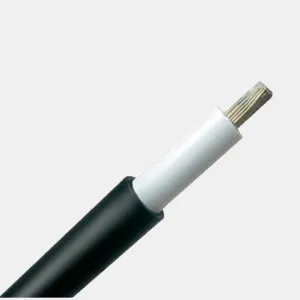
Solar Cable 16mm
Category: Solar CableBrowse number: 428Number:Release time: 2025-02-19 01:19:0416mm Solar Cable is a high-quality, durable electrical cable designed for efficient DC power transmission in solar photovoltaic systems. Featuring a 16mm² stranded copper conductor with UV-resistant insulation, this cable ensures excellent conductivity and long-term resistance to harsh outdoor conditions. Ideal for residential, commercial, and utility-scale solar installations, it meets international standards for safety, weather resistance, and performance.
News
Category:
No search results found!
Case
Category:
No search results found!
Video
Category:
No search results found!
Download
Category:
No search results found!
Job
Category:
No search results found!
Featured Products
No search results found!



 Phone
Phone E-mail